


Varmam Treatment For Shoulder impingement syndrome
- Aug 8, 2017
- 3 min read
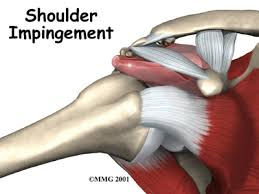
Shoulder impingement syndrome also called subacromial impingement, painful arc syndrome, supraspinatus syndrome,swimmer's shoulder, and thrower's shoulder, is a clinical syndrome which occurs when the tendons of the rotator cuff muscles become irritated and inflamed as they pass through the subacromial space, the passage beneath the acromion. This can result in pain, weakness and loss of movement at the shoulder.
Signs and symptoms

The most common symptoms in impingement syndrome are pain, weakness and a loss of movement at the affected shoulder. The pain is often worsened by shoulder overhead movement and may occur at night, especially if the patient is lying on the affected shoulder. The onset of the pain may be acute if it is due to an injury or may be insidious if it is due to a gradual process such as an osteoarthritic spur. The pain has been described as dull rather than sharp, and lingers for long periods of a time, making it hard to fall asleep at night. Other symptoms can include a grinding or popping sensation during movement of the shoulder.
The range of motion at the shoulder may be limited by pain. A painful arc of movement may be present during forward elevation of the arm from 60° to 120°.Passive movement at the shoulder will appear painful when a downwards force is applied at the acromion but the pain will ease once the downwards force is removed.
Causes
When the arm is raised, the subacromial space (gap between the anterior edge of the acromion and the head of the humerus) narrows, through which the supraspinatus muscle tendon passes. Anything that causes further narrowing has the tendency to impinge the tendon and cause an inflammatory response, resulting in impingement syndrome. This can be caused by bony structures such as subacromial spurs (bony projections from the acromion), osteoarthritic spurs on the acromioclavicular joint, and variations in the shape of the acromion. Thickening or calcification of the coracoacromial ligament can also cause impingement. Loss of function of the rotator cuff muscles, due to injury or loss of strength, may cause the humerus to move superiorly, resulting in impingement. Inflammation and subsequent thickening of the subacromial bursa may also cause impingement.
Varmam treatment is an external therapy in Siddha.
It’s purely anatomical and is introduced by Siddhars for the human’s well being. Specific anatomical complex parts of the body are stimulated in Varmam treatment.
These points are manipulated over superficial nerves, vessels, bony prominence, soft tissues, or their junctions. These energy points when hit by any external forces will cause severe illness.
In fact Siddhars used these energy points for curing the illness. These points are stimulated either by giving pressures in circular manner or in pointing way constantly.
Here Pulling certain muscles and tendons, blows, punch over certain areas of the body are executed. Treatments like corticosteroids, Acromioplasty, Arthroscopic subacromial decompression techniques, intralesional injections into the subacromial space are available , but permanent cure is a difficult one or at least consumes considerable time period.
The Varmam treatment is much effective in orthopedic disorders like lumbar disc problems, cervical disc problems, Shoulder Impingement Syndrome, etc.

Varmam Points For Shoulder Impingement Syndrome
1. Panja mudichu adangal
2. Puja Varmam
3. Kaakattai Varmam
4. Savvu Varmam
5. Muttu Varmam
6. Kavuli kaalam
7. Manjaadi Varmam

8. Kaikuli Varmam
9. Kai suluki Varmam
10. Chippi Varmamthese Varmam points, impinged rotator cuff get released from the subacromial space and thus symptoms are relieved.


Comments